
The home for your gaming life
collectedorganizedjournaledreviewedshared
For players AND developers.
Get Started — It's FreeFor players AND developers.
Get Started — It's FreeEnjoy the following with a free account.
Collected
Import from Steam, or add titles by hand from the full IGDB catalog — every platform, every genre. Never lose track of what you've played, finished, or wishlisted.
Organized
Make every game its own hub — attach its Discord, subreddit, guides, emulators, any link at all. Add tags and a status to filter your library, build curated lists, and pin them to your profile.
Journaled
Games are long, evolving experiences. Write entries as you play — the feel of a session, the trick to a boss, the moments worth remembering. Log your mood and tag what matters, and the whole story's there in five days or five years.
Reviewed
Half-star ratings, titled reviews, and tagged spoilers. Share what you actually thought — the good, the messy, the polarizing — without ruining it for anyone who hasn't gotten there yet.

Shared
Make every part of your account as public or private as you like, and engage with the community at the level you're comfortable with. Follow the gamers you trust to see what they're playing, journaling, and rating.
Verified developers can journal games they've made or are making — sharing dev diaries, postmortems, and memorials from the other side of the screen. gLOGGED isn't just the home for your gaming life. It's the home for your game development life, too.
While a game's in progress. Build-in-public (or private) entries from the people making it — milestones, decisions, the messy in-between. Solo devs and small teams welcome.
After a game ships. The candid retrospective — what worked, what didn't, what you'd do differently. From the verified hands that made it.
For games whose servers went dark, projects that never shipped, classics whose chapter is over. A proper send-off from the people who made them.
Recent journals, developer entries, and reviews from the gLOGGED community
Teamfight Tactics
Just went platinum this meta. Emerald next. Space groove. Three vanguards. Double snipers and paired dark star. (Mord and Jhin)
Jon Hales

N1RV Ann-A: Cyberpunk Bartender Action
ObsessedThe art direction is doing an enormous amount of heavy lifting here. The art direction is doing an enormous amount of heavy lifting here. Spent the whole evening exploring instead of touching the main quest. Started a replay just to see the early hours with everything I know now. Finally cracked the boss I'd been stuck on all week, and the relief was real. The writing caught me off guard in the best way tonight. Not sure how I feel about the ending — it needs to sit with me a while.
gLOGGED Showcase
New World: Aeternum
Tech Manager# New World: Aeternum — My Personal Development Experience I came onto New World: Aeternum roughly three months after the original launch. At the time, it was Amazon’s first AAA game effort, an MMORPG developed by Amazon Game Studios in Irvine, California. I had been watching the game from the outside. I knew about the launch, the excitement around it, and the fact that it was received very well. I had not purchased it myself, partly because as a quadriplegic, I was not sure whether I would physically be able to play it. With the limited articulation I have in my hands and arms, real-time action games are simply difficult or impossible for me to experience in a normal way. Shortly after launch, though, something happened that turned part of the player base against the game. Some players felt burned, some left, and some of that negativity became long-lived. That was sad to see, especially as a developer for 30 years. We understand how a single glitch can turn a fan base completely off to a product. And, sad as it is, it's usually very difficult and sometimes impossible to win them back. I was brought onto the team to lead outsourcing and visual effects. Those became my main areas of responsibility, and VFX would remain one of my favorite parts of the job for the entire time I was there. ## The Team Even during the interview process, I was impressed by the studio developers. I have been in development a long time but I have never worked with so many talented, brilliant, hardworking, and capable individuals in one place. People underestimate how much work goes into shipping an MMO at all. Then add live support, new content, bug fixes, performance work, console support, system changes, and constant player feedback on top of that. It was a tremendous amount of work, and the team gave everything they had. The producers were supportive, the engineers were brilliant, the designers were creative and collaborative, and the artists across the studio were excellent. Amazon really had hired an incredible group of people, and I was grateful to work alongside them. ## Outsourcing The outsourcing group was made up of very accomplished artists. These were not simply productivity managers. Most had the ability to create quality work themselves and were excellent at guiding external partners toward the quality bar the game required. It was a strong group, capable talent, and I did not have to do a lot of hand-holding. We worked with external teams on weapons, armor, characters, MTX, environmental props, and foliage early on and the team would branch out to animation later. A lot of effort went into improving the process itself — better technical checks, reducing unnecessary iterations, and helping external partners prediagnose issues. I enjoyed Amazon's focus on building and educating leadership. We had a quick lead promotion inside the outsourcing department and I was grateful to be part of that process and to see those who were deserving rewarded for their hard work and effort. ## Visual Effects The internal VFX team was small but extremely talented. Internally we had as few as three and as many as five effects artists. However we also oversaw and integrated the efforts of development partners, three additional external teams. The tools we used were proprietary and, while capable, were also frequently buggy. The engine had grown out of Lumberyard, and by that point, everything under the hood seemed inseparably connected to everything else. A small engineering change in one area would unexpectedly break something deep in the VFX pipeline. That’s just part of working on a live game with proprietary tools. Things broke - it sometimes seemed weekly. Tools went down. Bugs multiplied. We still had to keep creating content. That said, I am extremely proud of the work that we accomplished in VFX. Our artists simply got it done. Whether it was on game play, player, environmental, NPC, bosses, part of the cinematics, or random emergent requests, we rarely said no. I was very proud of what we were able to achieve along the lines of sheer production output. For a while, continuing game content shipped on a very fast monthly pace. Eventually we moved towards a more manageable seasonal cadence. My focus was always toward efforts to make the tools, workflows, and pipelines more predictable, efficient, and less painful for the artists. I did coding, created some effects myself, reviewed internal and external VFX work, directed assignments, and helped manage the overall flow of content. But more than anything, I loved the creative side of VFX. It is one of those areas where art and technology meet in a very direct way. It is an area of development wherev artists can enjoy broad creative flexibility and can also wrangle asks that are technically challenging and that require deep problem solving opportunities. Successful and original solutioning can be immensely satisfying. ## VFX in an MMO There is a lot that goes into successful VFX for any game. One of the hardest parts of VFX in a MMO is legibility. An effect can not simply look good when a single player uses it. It also must work when fifty players use it at the same time. In large wars, with up to a hundred players fighting together, visual clutter. is always a huge challenge. Every spell, impact, trail, status effect, weapon ability, and environmental effect has to be compelling enough to feel good, but clean enough that the player can still understand what is happening. That is a constant balancing act. We had our challenges and some implementations were more successful than others. But, as a whole, I think we did very well with the tools and time and talent we had. New World is, in my opinion, one of the best-looking MMOs out there. But that also meant we had to be careful how elaborate VFX visuals are. Beautiful FX are great until it becomes noise. The challenge is always to make something beautiful, readable, performant, and scalable all at the same time. For the most part, the best VFX are visual enhancements that are not noticed, but if absent, leaves a scene or environment breathless-missing something. ## Optimization and Mounts One of the things I am most proud of is the VFX optimization work we did leading up to the console launch. We were able to reduce the weapon and ability VFX load by over 60% without destroying the general look or feel of the fx experience. That was a big accomplishment, especially for a live MMO preparing to launch across console and PC. I am also proud of the mount VFX work. Mounts were not originally in the game, and once they became a priority, they had to happen quickly. I helped with the main traversal effects, including speed trails, footprints, terrain-based effects, and related visual states. I wrote the Lua code that handled many of the mount VFX states. We did not have engineers available to fully own that work, so I learned what I needed to learn and tied the VFX states into the engine with some engineering reflection support where needed. That included things like spawning, falling, landings, traversals, terrain effects, and different mount behaviors. It came together quickly and with surprisingly few bugs, which I was proud to be a part of. ## The Hard Part The hardest part for me was watching the public response. I understand that players had frustrations. I understand that some people felt disappointed. Customers have every right to criticize a product, leave feedback, stop playing, or move on. But from the inside, what I saw was a team that cared deeply and worked incredibly hard to make the game better. I saw developers agonizing over customer feedback and expectations. I saw developers doing their best to fix what players expressed in those areas they could. I saw developers adding content, improving systems, optimizing performance, and trying to create the best experience within the realities of time, technology, budget, and company direction. Sometimes that's the balance the audience doesn't see. The dance developers do with marketing and company priorities, customer expectations, and personal and team creative direction – which are not always in alignment. But that is the nature of a creative project and also what makes creative projects so much more difficult than typical business products - which are risky enough by themselves. There were loyal players who saw that effort and championed the game. I appreciated those players tremendously. But there were also people online who seemed determined to burn the game down no matter what the team did. That was hard to watch. There is a kind of anonymity and mob mentality online that can turn productive criticism into something more destructive. At some point, it stops being feedback and becomes an effort to make sure something cannot recover. That bothered me. I believe humanity is better than that. Developers are not deliberately ignoring customers. In my experience, all developers I have worked with want players to enjoy what they are making. They want the game to succeed. They want the work to matter. But development is always a balance between what players want, what the company needs, what the schedule allows, what the technology supports, and what the team can realistically deliver. From my point of view, the New World team did a remarkable job at delivering what they did. ## Final Thoughts I actually did end up buying and playing the game. I put over 400 hours into it. Maxed out four level 65 characters and tested characters to level 20 eight times. It was fun. It was a visual treat. And even for a quadriplegic who played on a touchpad with a pinky knuckle, it was a great experience. By the end, I honestly believe New World: Aeternum had gone from a good game to an excellent game. Unfortunately, sometimes quality and effort are not enough. Timing, perception, business realities, and player momentum all matter too. Eventually, the studio was shut down, and Aeternum along with it. (Not to mention another very high profile intellectual property MMO many of us had been working on diligently for some time.) That was incredibly sad. Still, I am proud of the work and most of all, I am proud of the team. I am grateful to be able to work with some of the most creative, talented, and brilliant developers I've met in the industry. New World: Aeternum was not perfect. But it was ambitious, beautiful, complicated, and made by people who cared far more than many players probably realized. I stand by the quality of the game. I stand by the effort of the team. And I am grateful I got to be part of it. It was an incredible ride.
Jon Hales
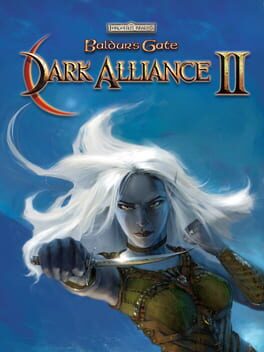
Baldur's Gate: Dark Alliance II
Lead# Baldur’s Gate: Dark Alliance II — The Nine Month Miracle ## Coming Into Black Isle Baldur’s Gate: Dark Alliance II was my first real opportunity to step in as a lead artist and deliver a full production from beginning to end under tremendous expectations. It was an interesting situation from the beginning. The original Baldur’s Gate: Dark Alliance had been developed by another team - Snowblind. They had built the engine, created the original art assets, and established the visual bar for the game on PlayStation 2 and Xbox. But that original team was no longer available. They had either been acquired or pulled away by Sony to develop another product. - Champions of Norath. So Interplay still had the engine, and they wanted to make a sequel. But they didn’t really have the original development team to make it. The game was also an interesting IP situation. It was a Dungeons & Dragons property, and there were many hands in the pie. Vivendi as the publisher, Hasbro, and Wizards of the Coast. I won’t get into the crippling dynamics. But the bottom line is Interplay/Black Isle Studios had the ability to do another Dark Alliance game, but they needed a team that could actually execute it. Black Isle had a great reputation. Everyone in the industry knew who they were. They were known for their PC role-playing games, and they had a very respected name. But they weren’t really a console development studio at that point. They were historically a PC team, and they were already working on their own projects internally. So they needed someone with console experience. They started looking for a lead artist who could come in and help build the art side of the production from the ground up. I was ecstatic about the potential and opportunity and, after flying down to meet many of the company and wading through a few interviews, I was even more impressed. I wanted to be part of what I considered an iconic development team. The prospect and responsibilities were daunting and heavy. And that’s exactly what I wanted - an opportunity to prove myself. I was beyond excited when they decided to offer me the position. I knew Black Isle’s reputation. I knew what it meant to be part of that studio. I had played and loved the original Dark Alliance, so I knew very clearly what I was stepping into. However, there were a lot of unknowns surrounding wrangling the technology, defining the pipeline, ramping a team, all pitted very high internal and external expectations.. This wasn’t some unknown product where we could define the bar however we wanted. The first game had already set a very high visual bar. The environments were gorgeous, and the technology behind them was very impressive for the time. I came in excited, but also knowing this was a serious challenge. ## The Situation We Walked Into At the time, there was only a little indication that Interplay was struggling. I remember they had just downsized from two offices to one office in Irvine when I got there, but I did not fully understand what that meant or how much pressure the company was under. I came in believing that with the talent at Black Isle, and with enough organization and productivity, we could get the product out on time, on budget, and that it could be successful. I came on board around October 2002, or very close to that. At first, I think I was the only one working on the project directly. My job was to iron out the art pipeline and document it, with help from the Fallout team, who were working with a modified version of the engine. The initial goal was very practical: Get a new character in-game. Get a new level in-game. Prove that the pipeline worked. Once that was complete, and once we had proof that we could actually create art and get it functioning in the engine, two other artists were moved over to help. I believe that was how 2003 started. I think Dave started designing the game just prior to 2003 as well. After a couple more months, we brought on a couple more artists to help us prepare our demo for E3. Around that time, I believe we were working with four or five artists until May or June. That summer, we brought on two young but brilliant animators and moved another couple of artists over from FR6. Later in the year, we expanded further, eventually reaching somewhere around 10 to 12 in-house artists including myself. I also oversaw outsourcing some tile and character work to two external companies, Reflexive and Cyberlore, to help us finish the game. From what I remember, we also had about four engineers and Dave’s design team of three. So by the end, the team was much larger than it was at the beginning. But that is important to understand: we did not have the full team the whole time. We ramped slowly. Most of the production happened while we were still building the team, still learning the technology, still documenting the pipeline, and still trying to hit a very aggressive deadline. ## The Engine and the Visual Bar The original Dark Alliance engine was pretty groundbreaking. The PlayStation 2 had some strange strengths and weaknesses, but one thing it could do very well, if you built your technology around it correctly, was push a tremendous amount of tiny triangles. The engine took advantage of that in a very smart way. The environments were built from tile pieces. Artists would create and arrange these pieces into the levels, and then the whole thing would eventually get baked down into what was basically a dense mesh soup. The geometry, texture information, and lighting data could then be streamed in and out of memory very efficiently. It was not the kind of environment pipeline where you just modeled a few big clean pieces and threw them into the game. The engine loved dense, tiny, baked geometry. No big polygons. No simple chunks. Everything had to be created in a way that worked with the baking process and with the engine’s very specific expectations. The final level process was basically a burning process where all of the texture pixel information and lighting were encoded with the mesh data of the environment. Everything streamed in and out of memory as the character moved through the world. The engine was magnificent. The result, when it worked, was beautiful. The first game looked fantastic, especially for the hardware. But for us, the challenge was that we had the engine, we had some documentation, but we did not have a full team that already knew how to use it. So my job was to discover, test, and document the art creation pipelines. Verify every aspect of art creation and outline our process for artists. ## Three Months Alone For the first three months, I essentially worked alone. That was the foundation period. I had to figure out the environment pipeline, the tile creation process, the 3D Max tools, how the baking process worked, how to create something that would actually show up correctly in the game, how to light the environments, how to set up collision and bounding boxes, and how to make sure all of that data survived the process and behaved correctly in the engine. I also stood up destructible object pipelines which were a big part of the first game as well as animated props and environmental lighting and effects. I was able to find opportunities to write 3DS Max tools to automate repetitive and time-consuming tasks related to environment tiling, asset creation, tagging, and export systems that I feel remarkably expedited time-consuming and error-prone activities. I outlined character creation pipelines, skinning, rig, and animation parameters, lip sync, and dialogue workflows. The original game had a robust NPC dialogue system allowing cameras to zoom into close proximity dialogue for high fidelity interactions. I also stood up and documented UI, front end, and associated workflows. But that was the assignment. And honestly, that was also the opportunity. This was my chance to prove that I could lead the art side of a console production. Not just make pretty assets, but actually establish a pipeline, document it, understand the technology, and prepare a team to execute against a very aggressive schedule. ## The Schedule Was Insane But when is it not? The full production schedule was basically twelve months. Artistically, the first three months were me figuring out the pipeline and setting up the foundation. So in reality, we had about nine months of actual production. Nine months. To build a full sequel to a successful console action RPG. With a new team. Using an engine we were still learning. With a visual bar set by a game that already looked excellent. It was quite daunting and very exciting at the same time. Once real production started, I was given a few other artists, and we worked like crazy to get characters, creatures, environments, animations, and production workflows moving. Over time, we started ramping up. Some of them were new hires, some were transferred from existing products. We hired animators. We brought in more internal artists. We brought on 2D artists. We also started working with external partners. By the final stretch, we were somewhere around thirty people total contributing to the art production when you included internal artists and external teams. But again, that number is a little misleading, because we did not have that full force for the whole project. We ramped slowly. Most of the production happened while we were still building the team, still training people, still learning the technology, and still trying to hit deadlines. That’s what made the project so intense - and partly why I feel it was so successful. ## It Was Not Just an Art Accomplishment Because I was the lead artist, it is easy for me to talk about the project through the lens of the art team. And obviously, the art team delivered a tremendous amount of work. But I do not want to downplay what engineering went through. Engineering had to support a lot of new systems. They had to keep pushing the game forward while working with a code base that, from what I understood, was extremely difficult to work with. They had to support the new gameplay mechanics, the expanded systems, the technical needs of the content, and all the normal production fires that come up on a game like this. We had some really great engineers on that project. They helped take what could have been a fairly straightforward sequel and support the features that made it feel like a real evolution of the first game. That is a big deal. It is one thing to have design ideas. It is another thing to get those ideas functioning inside an existing engine, on fixed console hardware, under a brutal production schedule. The engineering team deserves a lot of credit for that. ## What Design Brought to the Game I also want to acknowledge the tremendous design enhancements in the game. In my opinion, Dark Alliance II was a very innovative game, especially in terms of gameplay systems and player experience. Dave did a brilliant job on that side as Lead designer. He expanded the game without losing what made the original work. That is not easy. A sequel has to feel familiar enough that fans of the first game still recognize what they loved, but it also has to justify itself with new ideas. He introduced mechanics that gave the game more depth than the first one. One of the big additions was a trigger or shift-style system that allowed for more complex interactions and abilities. It gave players access to deeper combat options, including things like dual wielding and more layered character abilities. He also introduced the gem and crafting system, which was a huge addition. That system gave players a lot more customization. It made loot and equipment feel deeper. It gave the game another layer of decision-making beyond just killing monsters and picking up better gear. That was a major value add for the sequel. The story was also much larger. From what I remember, it was roughly twice as long as the first game. So between the expanded story, the five playable characters, the larger bestiary, the crafting systems, weapon systems and animation, and more environments, we really did deliver a lot more game. Everywhere sequels get a bad rap. And, although artistically, I can see where we weren’t quite at the bar, design-wise the sequel was IMHO better, deeper, and more robust. All that, and it still felt tightly woven to the original. It never felt like a departure of the expected narrative. That was one of the things I was proud to be part of. I liked working on products that were not just content extensions, but actually tried to move things forward. And I think this game did that. ## How We Actually Got It Done Looking back, I think one of the main reasons we were able to finish Dark Alliance II was that we were very practical about production. We did not have the luxury of wasting a lot of time. Our executive producer Scot was in the trenches with the team coordinating communication, removing obstacles, challenging our projections and expectation as needed. But ultimately, giving the leads the rope we needed to dig deep and get things done. There was not a huge amount of beautiful concept art created just for marketing or inspiration. There was not a long exploratory phase where everyone tried a dozen different directions. We had to move fast. Usually, Dave would describe what he needed from a design standpoint, and then I would either communicate that to the artists, do a quick sketch myself, or ask an artist for a quick conceptual sketch if the idea needed more visual clarification. Once we had enough direction, we moved into actual development. The operative word is “enough”. That was really the key. We tried to avoid wasted work. We tried to avoid redoing things over and over. We tried not to change direction unless we had to. The design was modular and flexible enough that we could keep moving forward without constantly breaking what had already been built. On the art side, my focus was more about establishing an overall direction and keeping productivity high than micromanaging every detail of a very specific vision. This is where I feel like we maybe missed in a couple of places. And this is where onlookers can easily poke holes in some of the environment visuals in a direct comparison. But, there were certain places I felt like we visually excelled over the original including PC and NPC visuals as well as animation. Still, my North star was productivity and delivering content over polishing and under delivering. This simply meant understanding when we needed to ‘move on’ from art that could have used a little more love in the interest of hitting deadlines. ( Did I mention I felt like this studios’ future depended on delivering the product?) I have worked with people who micromanage in such a manner that everything must match exactly what is in their head. That might work in certain, more flexible scenarios, but I do not believe it would have worked on this project. We had too much to build and too little time. So I tried to give the artists a healthy amount of ownership after any necessary direction. If they were building an NPC, an environment, or a creature, I wanted them to feel like they could put their own mark on it as long as it fit the needs of the game. There was feedback, of course. Sometimes things had to be adjusted or redone if they fell short of what was expected. But, that did not happen often. We had accomplished artists, and most of the time, once they understood what was needed, they could run with it. I also liked being in the trenches with the team. I was not just reviewing work and we seldom had meetings. It was a small enough art team that I had good communication with everyone involved. I was also participating in content creation. I built characters, NPCs, environments, animations, UI, and whatever else needed to get done. I created or worked on eight or nine different environments myself, along with a PC, animations, UI, and lots of other content. That may not be the way art leads work on larger modern teams, but for this project, it was a necessity. I expected a lot from the artists, but I also expected a lot from myself. ## Crunch, Planning, and Not Wasting Work I also want to be honest about the schedule. This was an intense project. There were weeks near the end where I put in 40 hours by Wednesday morning. That kind of pace is not sustainable, and I would not present it as some ideal way to work. But I also want to be clear that we did not mandate extra hours or crunch for the my artists or the team. There were individuals who stepped up and put in extra hours to deliver excellent content, but we never mandated overtime and I believe there was also a portion of the art team that never had to work significant extra hours. To me, the timely development came down to proper planning, hard work, realistic expectations, flexible and modular design, and very little wasted work. We were not constantly throwing things away. We were not constantly changing course. We were not creating piles of beautiful concepts that never became actual game assets. We were trying to build the game as directly and efficiently as possible. That sounds obvious, but in game development it is not always how things go. There can be a lot of churn. A lot of rethinking. A lot of direction changes. A lot of art and feature creep. A lot of work that gets redone or thrown away. On Dark Alliance II, we did not have time for that. And honestly, I think that discipline was one of the reasons we survived the schedule. ## What We Actually Delivered Considering the schedule and the ramp-up, what we delivered was nothing short of amazing. We created nearly 50 additional environments. We more than doubled the bestiary, or at least came very close to that, depending on how things are counted. We added somewhere around 40 to 60 new creatures, including some really fun and sometimes very large creatures pulled from the Dungeons & Dragons monster manual. We had additional dragons, creatures with riders, and a huge variety of enemies that were not in the original game. We also massively expanded the number of high-fidelity NPCs. At the time, these characters were around 2,000 polygons, with two 256x256 textures. One for the face and additional items/details (faces showed up large during dialogue) and another for the body. By today’s standards, that sounds tiny. But for the time, especially with the right artist, you could make characters look very good with those limitations. And some of our artists were excellent at that. They knew how to get a lot out of very little. That was one of the things I really respected on our team. We had really good artists who understood efficiency and were good about working their discipline within tight constraints. I admired their skills. We also created a tremendous amount of animation. We introduced multiple playable characters with unique animation needs, different weapon types, one-handed weapons, dual wielding, two-handed swords, two-handed axes, long weapons like spears, bows, crossbows, thrown weapons, creature animation sets, NPC dialogue animation, and everything else the game needed. We added more weapons, equipment, items, feats, skills, crafting, interactive characters, cinematics, props, and UI additions. As a full product, Dark Alliance II had a tremendous amount of value. It was not just “more of the first game.” It was bigger. It had more playable characters, more creatures, more NPCs, more environments, more story, and more gameplay depth. That matters. A sequel needs to justify itself, and I think we did that. ## The Artists I also want to give a real shout out to the artists I worked with. Everyone I can remember from that team was unbelievably competent. That is not an exaggeration. The amount of work we had to get done was enormous. We were dealing with environments, characters, creatures, NPCs, animations, textures, tools, exports, technical restrictions, and constant production demands. And all of it had to be done fast. The artists really stepped up. A good artist on a game team is not just someone who can make something pretty. They have to understand the technical boundaries. They have to solve problems. They have to make good decisions quickly. They have to know when to polish and respect deadlines and when they are asked to move on. That single fact alone is an absolute necessity for management and art leads. That is what can make the difference between a shipped title and a canceled title. And on this project, we needed all of that. I was very fortunate to work with artists who could actually deliver under pressure. ## The Animators Refused to Take the Shortcut One example that still stands out in memory was our animators refusing to lower the bar for the NPC dialogue animation. We introduced a lot of new interactive NPCs and a lot of dialogue. In order to make sure we could actually get all of it done, I proposed a shortcut to the animators. The idea was that they could create a library of canned gestures and expressions. We would lip-sync all the dialogue, but then supplement the lip-sync with reusable body gestures, so the characters would still feel alive without every single line needing custom body animation. Honestly, it was a practical suggestion and it would have saved lots of time. But the animators did not want to do it that way. They refused to take the shortcut and instead, hand-animated the body language for every single line of dialogue for every interactive NPC. And they still delivered it on time. Talk about impressive. It is one thing to say you care about quality. It is another thing to take on that much extra work under that kind of schedule and actually get it done. That was the kind of team we had. People stepped up. ## Characters: More, More Interesting, Better There were a couple things I wanted to improve visually over the first game. One of the biggest was characters. Both Dave and I felt that the characters in the original game were fairly generic. They worked, but they were very basic fantasy archetypes. For the sequel, we wanted to shake up the look and feel of not only the player characters, but also the interactive NPCs. I may be biased, but I believe our characters, both playable and interactive NPCs, were better visually overall than the characters in the original game. However, I think we probably landed outside the visual expectations for many Dungeons & Dragons players. We wanted them to be more interesting, more varied, and more memorable. The characters were definitely unique, and they definitely bucked the usual Dungeons & Dragons fantasy expectations. But I think we could have landed them a little more comfortably within the aesthetic people expected from that world. Still, I stand by the fact that the modeling and texturing of those characters were a big step up from the original. Even if the artistic direction (my responsibility) could’ve been better. Along with those new playable characters came new weapons, new equipment, new items, and all the animations required to support those things. That is one of those art direction lessons that sticks with me. Being original is good. Creating variety is good. Pushing against generic fantasy is good. But there is also a line where you still need the audience to immediately feel like the characters belong in the world they came to play in. I think we could have landed it better. ## Animations: Better and Many More I think one of the areas where Dark Alliance II really shines is animation. In my opinion, we took a huge step forward in the quality and amount of animation for the new creatures, characters, and NPCs we introduced. The animators shouldered a huge workload. They had to support playable characters with unique animation sets, weapon variations, creature sets, NPC dialogue, and all the different interaction needs that came with the expanded game. There were animation sets for no weapons, one-handed weapons, dual wielding, two-handed swords, two-handed axes, long weapons like spears, bows, crossbows, and thrown weapons. And on top of that, there were animation sets for all of the new creatures and every single line of dialogue for the interactive NPCs. That is a massive amount of work. And they delivered. ## Creatures: Many More, and On Par Visually We wanted to introduce as many creatures as we possibly could. We did not get to every creature in the monster manual that we wanted to include, but I think we did a fantastic job. We introduced somewhere around 50 or 60 new creatures that were not in the original game. Some of them were really fun. Some were large. Some had riders. Some were additional dragons. And many of the modeling and texture jobs were fantastic. On the creature side, I think our visuals were on par with the first game, and in some cases the animations were better. That was one of the big wins of the project. ## Environments: Many More, But Not Always as Polished On the environment side, I still have mixed feelings. The original Dark Alliance environments were gorgeous. I wanted very badly to keep that level of visual quality in the sequel. In some areas, I think we succeeded. Maybe even in most areas. But some of our levels fell short of the standard set by the first game. I especially remember the first outdoor level, which I created, as one that missed the bar I wanted. Looking back, we should have started with a level closer to the middle of the game and completed the first once I had more time with the tools and the pipeline. But we were also creating nearly 50 new environments. And design was in progress so we didn’t exactly know what environments to make. That is a huge amount of content. So at times, we prioritized content over polish. That was not always ideal, but it was necessary. In hindsight I’ve always remembered: If you can, never start production with assets that will be seen or experienced first by the player unless you have time for serious polish passes after you have ironed out all the development kinks and understand the best dev practices, tips and tricks. One area where I do think we improved things was with environment-specific props. The first game had some generic props that were reused across many levels, and that always felt a little redundant to me. For the sequel, we added a lot more area-specific props and animated environmental objects. That helped each area feel more distinct, even if every environment did not reach the same level of polish as the best areas from the original. I think the environments were probably the main reason we got lower graphic ratings than I would have liked. That is hard for me to say, because environment visuals were a major responsibility for me. But looking back, I think it is fair. We delivered a lot. But not every area had the polish we wanted. ## UI and Presentation The UI was mostly the same as the first game, with some minor improvements. We added custom backgrounds behind the characters that changed depending on the environment you were in. The character selection screen was okay. I was not as happy with our front end and loading screen, but it was not terrible. Gameplay is king and loading screens and front end UI is not gameplay. Still, they do create first impressions and first impressions matter. The bigger UI additions really came from the gameplay systems: added feats, skills, and crafting. Those systems gave the game more depth, and the UI had to support that. ## Cinematics: More, and On Par Although I believe gameplay is king, I really wanted to increase the cinematic experience of the game. At least, I wanted to improve the quality and presence of the cinematics. I desperately wanted to do full-fledged 3D rendered cinematics, but we simply did not have the time or the means to do that. Dave did all of our cinematics, and he did a tremendous job with the assets we were able to give him to work with and the time we had. I gave him whatever assets he asked for, and he had the autonomy to come up with the best movies he could with the material available. He delivered cinematics that were at least on par with the first game. I had created a storyboard for my vision of the initial intro cinematic, and even started on the rendering and composition of the initial scene, but unfortunately we never got around to completing it. That was one of those things I wish we could have done. ## Letting People Own Their Work Two examples that remind me of my leadership style on that project were the box cover and the cinematics. On the box cover, I was working with John, who was a great artist. We had proposed a couple of covers, but they were turned down by publisher marketing. There started to be a lot of back and forth between marketing direction and what John and I were trying to produce. At some point, I realized there were too many chefs in the kitchen. So I told John that I knew he was an excellent artist, and that he should work directly with marketing. I told him I had complete faith in whatever he and they came up with. That was not me checking out. That was me recognizing that the best thing I could do in that moment was get out of the way as marketing was insistent and I would only complicate the dynamic. Best to let the competent person closest to the problem do their best. The same thing happened with our cinematics. I wanted more. I had a bigger vision. I wanted more fully produced 3D cinematics. But we did not have the time. So I gave Dave the assets he needed and gave him the autonomy to solve the problem. That was one of the lessons from the project for me. Sometimes leadership is direction. Sometimes leadership is decision-making. And sometimes leadership is trusting talented people enough to let them do what they are good at. Micromanagement stifles ownership and creativity and greatly extends development time. ## Why the Team Held Together Building a game like Baldur’s Gate: Dark Alliance II under those kinds of constraints is absolutely a team effort. If any major part of the machine breaks, the whole thing can fall apart. If engineering cannot support the systems, design has to cut ideas. If design cannot define the experience clearly, art ends up building the wrong things. If art cannot deliver content fast enough, the game feels empty or unfinished. If production cannot coordinate departments, everyone starts solving different problems at the same time. On this project, somehow, all of those pieces held together. Not perfectly. No production is perfect. But they held together well enough that we delivered a really impressive game in a very short amount of time. That is probably what I am most proud of. Not just that I was the lead artist on a very demanding product with a very unique set of challenges. Not just that the art team delivered a huge amount of content. But the whole team — production, engineering, design, art, animation, external partners, everyone — managed to pull off something that could have very easily failed. Everyone had to bring their best game. And from my perspective, they did. ## The Reality of the Sequel I don’t remember the reviews perfectly, but my memory is that they were more mixed than the first game. Some were very good, some much less so. That’s probably fair. The first game had the advantage of being new. It surprised people. It looked better than people expected. It proved that a console action RPG could work really well in that format. The second game had a different challenge. It had to follow something that had already impressed people and sequels are hard that way. You are expected to give people more, but you also have to preserve what they loved. You have to innovate, but not too much. You have to improve the game, but you are also judged against the emotional memory of the first one. I think Dark Alliance II did a lot right. I also think there were areas where we could have done better. But considering the schedule, the team situation, the technology ramp-up, and the amount of content we created, I still look back on it as a huge accomplishment. ## What I Learned This project taught me a lot about leadership. It taught me that being a lead artist is not just about having the strongest artistic opinion in the room. It is about building a process. It is about figuring out what is possible. It is about communicating clearly. It is about protecting the team from chaos where you can, and being honest about what can and cannot be done. It is also about making peace with trade-offs. On a project like this, you cannot make everything perfect. You have to decide where the time goes. You have to decide which problems are worth solving and which ones you have to live with. That can be painful, especially when you care about the work. But shipping a game is not theoretical. At some point, the product has to get done. And all of the time, blood, sweat, and tears of hard-fought development can disappear into the void - following so many other failed projects that were also pioneered by grand visions - if the game never ships. If the work is never done. And we got it done.
Jon Hales

Kid Icarus: Uprising
Kid Icarus uprising is one of my favorite games of all time. It has so much going on, so much expression and freedom and such engaging design. The game has a general design of being half 3D bullethell shooter and half third person shooter with fast and responsive controls. Criticized for its unorthodox control scheme on release, as well as its length and difficulty not fitting the mobile console it was on, KIU only flaw is that the game itself is far too impressive for the platform it’s chained too, which is by no means a flaw of the game. Playing the game as long as I have, it becomes quickly obvious how truly well thought out it is and how much love and effort is baked into this title, something a very very large amount of Nintendo games over the past 10 years have desperately lacked. The game is creative, imaginative, endearing, charming, fun, and engaging in the most interesting ways. I still have yet to clear every level on the hardest difficulty, said difficulty system deserving special mention as uniquely dynamic in how it allows you to bet currency against your success. When it was around, the online pvp was also very fun, however the lack of it now does little to harm the games replay ability. I cannot recommend this game enough- save for one sole scenario. If you are left handed, this games obtuse control scheme makes it nigh unplayable without the circle pad bro, and not that great even with it. It’s a terrible tragedy that a good portion of players cant fairly experience this game because of the compromises made to for it’s hardware, and not that great remake or remaster on another console has ever been teased. It’s a true shame that one of nintendos best products will likely, assuming nothing changes, be lost to time.
NorouEvalou
Subnautica 2
Contains spoilers — open to read.
Bundydoc
Free forever. Upgrade when you're ready for more.
Create Your Free Account